Showing posts with label education. Show all posts

Sunday, January 20, 2013

Keystone species, Keystone teacher?

Keystone species are members of ecological communities that have a disproportionate effect on the community if they are removed. They need not be the most abundant element, but may play an important role, e.g. in keeping down the population of some other species that would otherwise dominate.

The classic experiment was performed in the 1960s by ecologist Bob Paine, who removed a species of sea star Pisaster ochraeus from a rocky shore intertidal environment. In months, the community became dominated by mussels and decreased in diversity. Because of this, he coined the term "keystone species" for the role that this sea star was playing in this community.

Pisaster ochraeus (via Wikimedia)
Paine himself has had a disproportionate influence on the academic community in the field of ecology. This profile article describes his career and students, and illustrates well how a single teacher can not only be a good mentor to his or her students, but also go beyond that to build a scientific family.

Wednesday, July 11, 2012

Google Earth and Science

Google Earth and its cousin, Google Maps, are really useful. I don't think I've used a street directory or road map since I learned how convenient it was to just google it. Aside from just being a tool for finding out how to get from point A to point B, or for businesses to promote themselves, it's also a great tool for crowdsourcing, as memorably happened after the Haiti earthquake two years ago.

It's really useful for scientists too. I'm sure many of us have used Google Maps to check out field sites before going there, and also afterwards to plot localities and routes. The terms "virtual globe" or "Digital Earth" refers generally to such tools, which represent geographical features in digital form. A recent paper in PNAS looks at how current virtual globe tools have been used to help science and make it accessible to the public, and what the prospects are for the future.

One way to get more out of Google Maps is to use KML, a standard markup language for displaying geographical data in virtual globe software (tutorial). If you already use the "My Maps" feature, you can download your maps as KML to share with others. Alternatively, if you want to plot known coordinates and annotate them, you can mark up your data as KML and import into Google Earth to visualize it. 

Saturday, October 08, 2011

Slime is going places

In college I kept a pet in my dorm room, possibly against regulations. However, it didn't make any noise, didn't poop all over the place, and didn't need to be fed every single day. When it got too troublesome to take care of it, I simply cut off a piece of it to keep, and killed the rest. Before you think I'm some kind of cruel monster, here's a photo of my pet.

Slime mold Physarum polycephalum growing outwards to feed on oat flakes.

Slime molds are amazing creatures. They're neither plant nor fungus nor animal, but are protists, the "eukaryotic leftovers". The one I had is called Physarum polycephalum, and is a common organism used for demonstrations in schools and biology classes. It's bright yellow, big, grows fast, and is easy to revive from a dormant culture. Slime molds come in two "flavors": the plasmodial molds like Physarum which are essentially giant single cells, and the cellular ones which are an aggregate of numerous individual amoeboid cells.

The New York Times science section, which has possibly the best science reporting of any mainstream newspaper, recently featured an article by Carl Zimmer on slime molds and why they're exciting to current biology research (via Twitter).

He highlights Physarum and its ability to solve "mazes" where the objective is to connect up different particles of food scattered on a substrate. This research won a team of Japanese researchers the prize in Transportation Planning for the tongue-in-cheek Ig Nobels in 2010 (and before in 2008). What the organism does is to spread its plasmodium outwards (much like the photo above) until it encounters these food particles, and then retract those parts of the plasmodium which are on barren areas leaving behind thicker "veins", connecting the food particles with each other and with the exploring front of the plasmodium. The link to transportation? When the particles are scattered in an arrangement resembling the major centers of the Tokyo metropolitan area, the resulting plasmodial vein network is quite similar to a map of the Tokyo rail network!

It sounds relatively easy to design an optimal transport network but such design actually requires a whole lot of trade-offs and is not straightforward. However I wouldn't go quite as far as hire them as transport engineers. The Japanese team used the mold's behavior as a template to come up with an algorithm for making such networks. The computational model is more easily controlled!

In addition to Physarum the other molds mentioned include the cellular slime mold Dictyostelium, which has a long and distinguished history of use as a lab organism for studying simple multicellularity. It's interesting to evolutionary science because to make its fruiting bodies (which release spores for dispersal), some of the slime mold cells in the colony have to sacrifice themselves to form the stalk, which leaves no descendants. This is an example of a cooperative behavior, which is puzzling from an evolutionary standpoint because it should theoretically collapse in a maelstrom of cheating for individual benefit.

Diachea leucopodia fruiting bodies, from MacRitchie Reservoir area in Singapore.
In the wild the diversity of slime molds has not been given as much attention as other organisms, but they have their own distinctive beauty. They come in many colors and shapes, but require some patience to find, by peering closely at decaying wood and leaf litter. There are slime molds in Singapore too, and I've posted a gallery of beautiful images taken by Serena Lee of the Botanic Gardens to the Protists in Singapore webpage. One particularly striking one is Diachea leucopodia, which has an iridescent black fruiting body borne on a white stalk (above). The diversity of slime molds from the tropics is poorly understood, with many species that look like temperate ones but may or may not be the same thing.

These creatures are often sidelined because of their taxonomic obscurity, and maligned because of their unfortunate name. Let's help to spread a better appreciation for them among the nature-loving public!

Wednesday, September 28, 2011

Great TED Talks for biologists!

Tim Handorf from the website Bestcollegesonline.com has compiled a list of "20 Unbelievable TED Talks for Biology Majors". These are very much worth watching! Among the highlights: Bonnie Bassler on how bacteria "talk" to each other, and John Kasaona on how poachers can become caretakers of wildlife.

The TED Talks are the cornerstone of the TED organization, a non-profit whose name stands for "Technology, Entertainment, and Design". They bring together people who have, as they put it, "Ideas Worth Spreading" and put their talks online. These ideas range from social causes to science and technology.

They're definitely good to watch and attention-grabbing, as you might expect from hearing people who're talking about what they are most passionate about.

One of my favourite videos which isn't on the list is David Gallo's show-and-tell of "Underwater Astonishments", ranging from deep-sea bioluminescent patterns (Edith Widder, who took the these videos, has a talk of her own) to the clever and changeable world of cephalopods (squid and octopods):

Linkl

The TED concept has also spread to different countries and cities with the TEDx series, which are TED events organized by independent organizations. In Singapore there's TEDxSingapore, TEDxNTU, and TEDxNUS. The Biology Refugia's own Sivasothi gave a talk about protecting biodiversity in Singapore for TEDxNUS:


In another video, graduate student Ang Yuchen explains his research on insect sexual selection:


Plenty more videos on all manner of subjects are available on the TED website. So instead of listening to yet another music video or watching cute kittens play with string on YouTube, why not check some of them out instead? You'll definitely learn something new!

Tuesday, July 26, 2011

Singapore Protozoans Part 1

Heliozoan
Heliozoan from Kranji Reservoir. Each unit on the graticule scale is 2.5 microns.

Microscope, murky water, a camera, and free time.

Lately I've been volunteering at Darren Yeo's new freshwater biology lab, but Maxine, the graduate student whose project I'm supposed to help with, has been busy with the Honours fieldtrip to Pulau Tioman and with getting sick (get well soon!) In the meantime, I've found that her plankton net samples from Kranji Reservoir are teeming with interesting and picturesque protozoa!

Today I captured some shots of microscopic aquatic life to share online, and you can browse the full set on Flickr [update 6/9/11 - I've moved all the media to my new protist website and the album is no longer available]. The picture above shows an organism called a heliozoan. The long radiating arms, called axopods, appear to be beaded with dew drops, which are actually organelles involved in prey capture called extrusomes. The spherical cell body itself is covered in a layer of spicules, which seem like a fuzzy layer of hair, but reveal finely ornamented detail under electron microscopy.

These pictures were taken in a fairly primitive way: by balancing a camera in front of the eyepiece of the microscope. The microscope was set up for brightfield illumination, but I closed down the condenser aperture to improve contrast, in the absence of any better option. Still, there's enough detail to recognize lots of protozoans and to tell a good story.

When I've got a decent bunch of these pictures and descriptions, I'd like to eventually put up a photographic guide to common protozoans in Singapore. That might help to address some of the 'macrobe' bias in the natural history scene here, by showing the beauty hidden in the very small.

As a bonus here's a video of ciliates squirming in the carcass of a dead planktonic crustacean. The bright droplets are oil globules, which the ciliates are feeding on (ingested oil globules are also visible within their cytoplasm). Outside the animal carcass you can see another ciliate which has been left out of the feeding frenzy, and is trying to find its way in....

Tuesday, June 28, 2011

Islamic creationism in Malaysia

Salman Hameed is an astronomer and sociologist of science at Hampshire College in the US. He has been conducting an extensive survey on Muslim attitudes to science and religion in several Muslim-majority countries around the world.
"[Hameed] has found that attitudes about evolution vary greatly from country to country. For instance, most Pakistani doctors accepted evolution, even human evolution. "But in Malaysia, we were really surprised to find a major rejection of not only human evolution but evolution in general," he says.

"Hameed expected to find more acceptance of modern science because Malaysia has a sophisticated high-tech industry. He and his colleagues now speculate that Muslims are trying to carve out a cultural niche that's distinct from the more educated Indians and Chinese in Malaysia. "We think the rejection of evolution has become part of their Muslim identity," he says."

(Source: Chronicle of Higher Education)
The article goes on to discuss other findings that were presented at a symposium on Islam and science held at Cambridge University this past May. One of the major figures in the world of Islamic creationism is Harun Yahya from Turkey, the pen name of Adnan Oktar. A previous blog post here on creationism in Hong Kong schools mentioned him in passing. He was responsible for sending a hefty, full-color tome titled the Atlas of Creation to major universities and research institutions world-wide, to the amusement and befuddlement of academics and scientists who received them. He has an extensive media empire publishing creationist titles, but a profile in the New Scientist magazine suggests that politics are also at play.

The apparent growth of creationism in Malaysia is as much a sociopolitical issue (of "identity politics") as it is a scientific one. Therefore the standard solution of "more education" on its own may be insufficient to overcome this obstacle to promoting scientific and technical literacy in the country.

Sunday, June 19, 2011

Transparent animals as art

The technique of 'clearing and staining' is used to prepare anatomical specimens of small animals to show their bones and cartilage in situ. It involves digesting away the protein in a preserved animal body with enzymes, and rendering them transparent with other chemicals. The skeleton is then colored with brightly colored stains, creating specimens that look almost like stained glass and definitely as beautiful (if somewhat macabre).

Japanese artist Iori Tomita has been making cleared and stained specimens since 2007. His project, called New World Transparent Specimen, is his effort to "help people feel closer to the wonders of life." Much of the appeal of his works, he points out, is because "they appear as if they were beautifully sculpted from minerals."

(Source: New World Transparent Specimen website.)
The website is definitely worth a look. I've always found anatomy to be oddly compelling. Quite a few of them are invertebrates (like the shrimp in the picture above), which I've not seen before as cleared specimens. The technique is typically used to prepare fish, amphibians, and other small vertebrates.

(via sarzha)

Wednesday, June 15, 2011

"Mismeasure of Man" Revisited

Stephen Jay Gould's 1981 book, The Mismeasure of Man, made the case against 'scientific racism'. He opened the book with an attack on the 19th-century physical anthropologists, the craniologists, who measured skulls as a way to classify different races as superior or inferior. Later on, he examined the origins of the IQ test and argued against its validity and statistical basis. In 1996, the book was reissued with a set of new essays, in response to the controversial 1994 book The Bell Curve. This was welcomed by those who opposed the Bell Curve's revival of biological determinism in intelligence.

Fifteen years on, Gould's book is back in the news but to criticism, rather than acclaim. One of the bodies of work that he analyzed and apparently refuted was that of Samuel George Morton, an American craniologist who amassed a large collection of skulls from around the world. Gould claimed that Morton's measurements exhibited bias, unconscious or not, that bolstered the preconceived notion that Europeans should have larger brain volumes than other, 'inferior' races. Morton supposedly fudged his analysis by selective reporting (see my previous blog post on other ways to fudge your science) and improper measurement. However, Gould did not remeasure the skulls himself, basing his criticism only upon his re-analysis of the published data. Now, a study by anthropologists who painstakingly remeasured Morton's skull collection has absolved Morton of misconduct. There was no mismeasurement, contradicting Gould's thesis that unconscious bias had influenced Morton's scientific methodology. The research team says: "Ironically, Gould's own analysis of Morton is likely the stronger example of a bias influencing results."

Read more at the New York Times, and the original article in PLoS Biology.

Reference:
Jason E Lewis et al. 2011. "The Mismeasure of Science: Stephen Jay Gould versus Samuel George Morton on Skulls and Bias." PLoS Biology 9(6): e1001071. doi:10.1371/journal.pbio.1001071

Thursday, December 30, 2010

Singapore Mangroves "Smelly, Dirty"?

Ron Yeo, who writes the nature blog The Tide Chaser, has written a paean to Singapore's under-appreciated mangrove swamps for The Online Citizen.

The mangrove habitat is a staple for school field trips and biodiversity classes, but being 'in the choir' (the one that is being preached to, in the idiom), I and maybe many of this blog's readers tend to forget that:
Dark, smelly, dirty, muddy, scary, mosquito infested, illegal immigrant infested… Ask the usual Singaporeans what they think of our mangroves, and these are some of the common responses. In fact, I even had a friend telling me that he did not like going to mangroves because he was afraid of snakes dropping down from the trees.
Yeo suggests that we should get people to break from these preconceived notions and actually go to see it for themselves. But let's be honest, mangroves do smell funky, and even if you do manage to get your city slicker friends or family to take a trip down to see what all the fuss is about, they might still complain about the heat and remember mostly the mosquitoes, especially if your stories aren't captivating enough or the otters are a no-show. Singaporeans can be a hard lot to please, right?

So I might add to what Yeo's suggests: if you care about nature in Singapore and spend time in our parks and forests, bring a camera and with just a little bit of luck you'll have some pretty pictures of flowers or animals to share online. Then you can answer the question "Singapore forests got anything to see, meh?", and show that appreciating nature is as much about how closely you look, as where you go. In this digitally-driven age, seeing it first on the computer screen might just be the 'hook' to bring people outdoors to see with their own eyes.

Tuesday, October 12, 2010

Sherman's Lagoon and the Census of Marine Life

The Census of Marine Life (CoML) is an international project to account for the world's marine biodiversity. Launched in 2000, it has now completed a decade of research, and is celebrating this milestone with a conference in London.

The results have been more than just scientific publications and pretty coffee table books. Artwork inspired by the Census includes a storyline in Jim Toomey's comic strip Sherman's Lagoon (scroll down this page to see), which follows the foibles of a (not very bright) Great White shark and his friends. Toomey has given a TED talk where he talks about his love of the ocean and marine life, including his stand against shark finning.

Sunday, October 03, 2010

Advice for Scientists-turned-Wikipedians

The most influential information resource in the world?
Like it or not, Wikipedia has become the first resource that most people turn to for scientific information on the Internet. As a result, minor inclusions and major omissions may become extremely influential, as may inaccurate information that inadvertently (or deliberately!) finds its way onto a given Wikipedia page.

Biologists, especially those involved in biodiversity, are in a great position to contribute, but how do we start? Here are ten simple rules from scientists at Cambridge and the Sanger Institute on what to do and what to avoid.

They observe that the anonymity of the Internet makes it possible for a nonexpert Wikipedian with editorial status to reject your well-crafted, expert opinion on a subject for a variety of reasons. The inability to argue from academic authority on Wikipedia is, in my opinion, a good thing for science writing - it promotes clarity and simplicity in the communication of scientific ideas and information, which feeds back into how we think and write about science both for scientists and the public.

For educators, having students write mock-up Wikipedia entries, or criticize (carefully chosen) existing entries on a given subject may be very useful in demonstrating the both the potential and limitation of Wikipedia as an information resource. The act of writing for a general audience will also certainly help consolidate one's own knowledge.

Wednesday, September 01, 2010

A very small forest, our central catchment is...

Last week I presented some of my students' work at the 8th Flora Malesiana conference. I discussed the gene flow of some species of native plants in Singapore (including Rhopaloblaste singaporensis) and provided a highlight of palm distribution projects that I have initiated with my current JC students. The gene flow work was from former student Yang Shufen's excellent work for her Honours thesis.

While preparing a slide to show the location where individuals of Rhopaloblaste singaporensis was collected (with permits from NParks) for the DNA sampling, I realised how small our Central Catchment Nature Reserve is.

This reserve encompasses the forests of Bukit Timah Nature Reserve, Macritchie Reservoir, Lower and Upper Pierce Reservoirs, Upper Seletar Reservoir and Nee Soon Swamp Forest.

5B35EB43-3942-4E97-AB52-F8E335F90909.jpg


Using Google Earth, I measured the width of the Central Catchment Nature Reserve and it was a little over 5km at some points.! It dawned on me then that we have walked around Macritchie in a mere one and a half hours.

That epiphany from the preparation for that talk lingers and rankles. And I want to do something about it.

Friday, July 30, 2010

A mini-"World Food Programme"

On Tue, Oct 20, 2009 I asked for articles about Norman Borlaug from my friends when I got this email digest link on a retrospective on Norman Ernest Borlaug. Immediately Siva sent me the pdf and also mentioned that he "talks about Borlaug Borlaug in soil ecology and south east asia conservation. 3-4 slides only with Ehrlich saying millions would starve and then came along Borlaug with dwarf spring wheat..." Siva also mentioned that he had seen an episode in the West Wing that mentioned Borlaug. He blogged about it here, as I discover.

Norman Borlaug's scientific contribution and industry was compelling and something I felt I could share with my science class. So I did up a just-in-time lecture. It's true that when you teach, you learn twice as my landlady used to say. So the more I did up my slides, the more I learnt of his enormous contribution to alleviating hunger. We've heard so much about the Green Revolution but when I dip-stick any class about who Norman Borlaugh was, I get blank stares. Then again, lots of people I know don't even know what types of food are made from wheat flour. And here was a man who almost single-handedly solved world hunger; and for India and Pakistan, their wheat yields went from famine levels to levels of self-sufficiency in just over half a decade, with India going on to becoming a net wheat exporter.

Within a few days of doing up the JIT lecture, I heard that the National Institute of Education was hosting Dr. M. Vijaya Gupta, World Food Prize Laureate who would talk about his fish programme in Bangladesh in the 1980s. The stories of how women become empowered through rural aquaculture were riveting and heartwarming.

It became a need for me now to package this into some sort of programme for students to get a more first-hand experience of "food". So that was how the Raffles "World Food Programme" was born. Interestingly, this food programme idea got people I spoke to, more interested than when i spoke about any other science workshops or electives that I have carried out. Food is such a common denominator.

IMG_1991.JPG
IMG_2150.JPG
IMG_2617.JPG


and our first harvest of pak choy. Extremely delicious with a taste of the earth.
IMG_2690.JPG


And just when I thought food issues were not going to be resurfaced again, Nature.com publishes a special feature entitled "Can science feed the world?" yesterday.

Monday, July 26, 2010

Expensive College Textbooks

The cost of textbooks is an unexpected surprise for most students new to the university. That intro bio book costs me more than $100 - and I have to get it because it's been assigned by the professor? New federal regulations in the US are trying to constrain publishers to limit the cost of college textbooks, but their effectiveness remains to be seen, as discussed by a group of panelists in the NY Times.

Outside the US and the West, the problem may not be as acute because cheaper international editions are available, but academic books are still costly. As I see it, the educators are the ones who will have to make the first step, for example by assigning cheaper trade books, online resources, or referring students to the library. Some may have to forgo a portion of their profits. It can be difficult; after all, a lesson taught entirely 'from the book' is more often than not a mediocre one.

Tuesday, July 06, 2010

Frog dissection Ipad app

Gizmodo mentioned a frog dissection Ipad app.

Though it will not replace the real experience of moving through the layers of tissue and muscles, it will be handy as an introduction and revision hence after.

NewImage.jpg


Thursday, June 03, 2010

Biochemists' Songbook - Online!


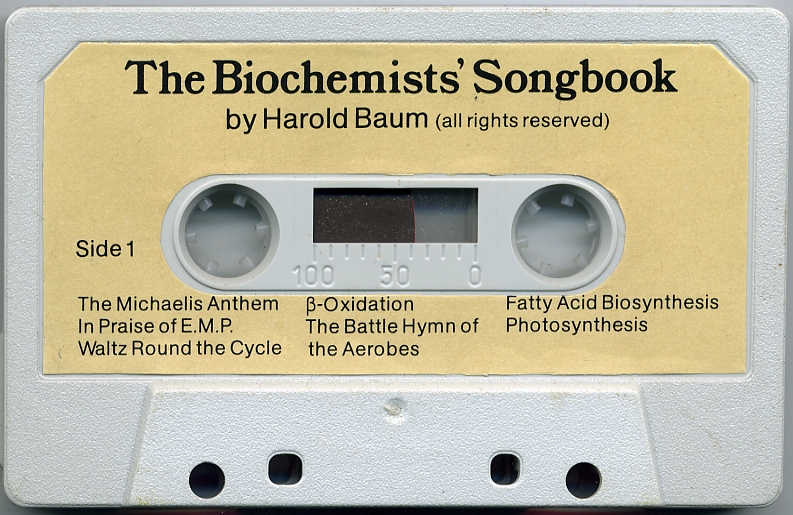
The Biochemists' Songbook is a compilation of songs on biochemical subjects, written to popular tunes, by Harold Baum ("perhaps the world's leading exponent of the biochemical ballad"), who was a professor of biochemistry at Chelsea College, University of London. It was originally published in 1982, and issued with a cassette tape of the songs, which are now available online with the author's permission. Enjoy great hits like 'Photosynthesis' (to the tune of 'Auld Lang Syne'), 'The Glyoxylate Cycle' (to 'The Lincolnshire Poacher'), and many more!

Admittedly only tangentially related to the themes of this blog but it should entertain anyone with fond (or otherwise) memories of A-level Biology.

Saturday, May 22, 2010

The first self-replicating artificial cell created

screenshot_05.jpg


We report the design, synthesis and assembly of the 1.08- Mbp Mycoplasma mycoides JCVI-syn1.0 genome starting from digitized genome sequence information and its transplantation into a Mycoplasma capricolum recipient cell to create new Mycoplasma mycoides cells that are controlled only by the synthetic chromosome. The only DNA in the cells is the designed synthetic DNA sequence, including “watermark” sequences and other designed gene deletions and polymorphisms, and mutations acquired during the building process. The new cells have expected phenotypic properties and are capable of continuous self-replication.


One year after synthesizing a synthetic genome, the Craig Venter Center finally published their results in Science. For this paper, Science has kindly allowed free access.

Of course this created alot of discussion amongst the scientific circle. Even President Obama penned a letter to the research team.

In the basic criteria of what life is like, most scientists agree that three basic components has to exist: a container, a way to harvest energy and an information carrier like RNA or another nucleic acid.

This is a step from similar protocellular work by Szostak from Havard Medical School. The Craig Venter Center team's bacteria can grow and divide.

Reading list suggested by Carl Zimmer.


screenshot_06.jpg


Thursday, May 20, 2010

NY Times New Field Scientist Blog


Science! As it happens! The New York Times website has a new blog, called Scientist at Work, the aim of which is, as they put it, "to give scientists in the field a chance to describe what they do as they are doing it."

Of course most day-to-day science is abysmally boring. It's interesting to think about science and talk about it, but to actually watch someone carry out a hundred PCR reactions or measure the second tarsi of countless pinned beetles for an afternoon is... not very entertaining. So trust the field biologists to jump at the chance to portray themselves as modern-day explorers, as the ones who truly get to see the action. Lots of breathtaking photographs too, such as this latest entry on Philippine nudibranchs written by Terry Gosliner of the California Academy of Sciences.

Don't expect to see too much ink spilled about the months of permit-haggling, visa-stamping, and grant-writing that bracket any field expedition, though. And why should there be, anyway? It doesn't interest the public, and those who would know about the boring bits don't need to be reminded. Even seasoned scientists and naturalists need to take a step back from the minutiae, every now and then, and reaffirm that what they study is truly exciting and awesome.

Wednesday, May 19, 2010

Evolve Music!


What happens when you cross modern European musical tastes with biological geekiness? A project like Darwin Rocks! This online game was produced by the Animal Evolutionary Ecology group at Eberhard Karls Universität Tübingen. It generates a few short pieces of synthetic music that has a number of variable traits: type of beat, instruments, key, rhythm. The user selects which ones he or she likes and dislikes, and then 'evolves' them for a number of generations. Repeat this process, and eventually, or so the idea is, you get a piece of music that has evolved to fit your musical preferences!

A neat way to spend a lazy afternoon, but one drawback is that most casual browsers will not attentively listen to all of the clips in their entirety. The 'hidden variation' that you don't observe can actually make the results quite different from what you were expecting! At least when I tried it out, it was producing some pretty awful sounds....

But it's worth visiting to have a look at the promotional music video they've made to illustrate the principle of Darwinian fitness. Or as the press release says: "The song and the music video with the title “Struggle for love” are about love, fight, and the right mix in evolution."

Protistology Bibliography

For those who are interested in microbial eukaryotes (a.k.a. protists, protozoa, algae...), I've uploaded a reading bibliography that I prepared this past semester. Suggestions welcome.