Showing posts with label Cetaceans. Show all posts

Monday, August 22, 2011

Save the Dolphins concert on 28 Aug 2011

Blogger Alex Au, best known for his political blogging, has also highlighted the work of the animal welfare group Acres on his blog Yawning Bread.

He describes their success in alerting the Agri-Food and Veterinary Authority (AVA), Singapore's regulatory authority for the wildlife products trade, to the sale of tiger parts and products in over 50 shops around the island.

Acres is now working to gather more support in its campaign, The World's Saddest Dolphins, to release the dolphins that have been captured for Resorts World Sentosa. 27 bottlenose dolphins were captured from the wild around the Solomon Islands, of which two have since died, which I previously blogged about here. Acres states that:
"Their world has already shrunk to a square sea pen, devoid of variety, bereft of sea life. They can’t hunt anymore. They beg and jump for handouts of dead fish, which arrive in buckets. There’s nowhere for them to roam, except back and forth. And nothing to do except turn round and round and go slowly mad."
These sentiments echo that of the Nobel-prize-winning student of animal behavior, Konrad Lorenz, who wrote in his book King Solomon's Ring:
"Now which are the animals really to be pitied in captivity? ... In the first place, those clever and highly developed beings whose lively mentality and urge for activity can find no outlet behind the bars of the cage. 
... 
"[O]f all the animals that suffer under the inefficient methods of many zoological gardens, by far the most unfortunate are those mentally alert creatures of whom we have spoken above. These, however, rarely awaken the pity of the zoo visitor, least of all when such an originally highly intelligent animal has deteriorated, under the influence of close confinement, into a crazy idiot, a very caricature of its former self."
Acres in collaboration with Young NTUC is hosting a free concert at Hong Lim Park in support of its Saddest Dolphins campaign, from 4:30 to 7:30 pm on the 28th of August (Sunday). Find out more on its Facebook event page

.

Monday, January 10, 2011

Dolphins for Sentosa Resort Moved to Philippines?

The proposed Marine Life Park run by Resorts World Sentosa (RWS) has come under fire for its planned dolphin show ever since word about it got out to the public. The dolphins were captured from the wild in the Solomon Islands and shipped first to the Philippines then to Langkawi, where they have been held for training.

Last October, two (out of seven) were reported to have died from a bacterial infection. In the last month, they have been moved again. According to Today Online:
An employee who wanted to be known as Ahmed, told MediaCorp that the dolphins were put into a container last month and sent to Langkawi's international airport, from where they shipped to the Philippines.
RWS has defended its decision to have a dolphin display by saying that it complied with CITES regulations on the trafficking of endangered species, and that the display would be "educating the public on marine life and environmental issues."

In reply, a member of the public claims that having "dolphins and whales in captivity is not about education or conservation, it is about one thing - profit,"and that the best place to learn from them is in their natural habitat.

Now that nature documentaries have become so advanced both in technical terms and in narrative sophistication, I think that one would learn more from watching a good film about the life and behavior of dolphins, filmed in the wild with wild animals, than from paying to see a handful of caged animals performing tricks. I'm not saying that zoos don't have value; what I have in mind are rare animals whose beauty and fascination lie as much in their behavior and interactions with their natural environment as with their physical appearance. Dolphins certainly fall in this category.

Monday, July 13, 2009

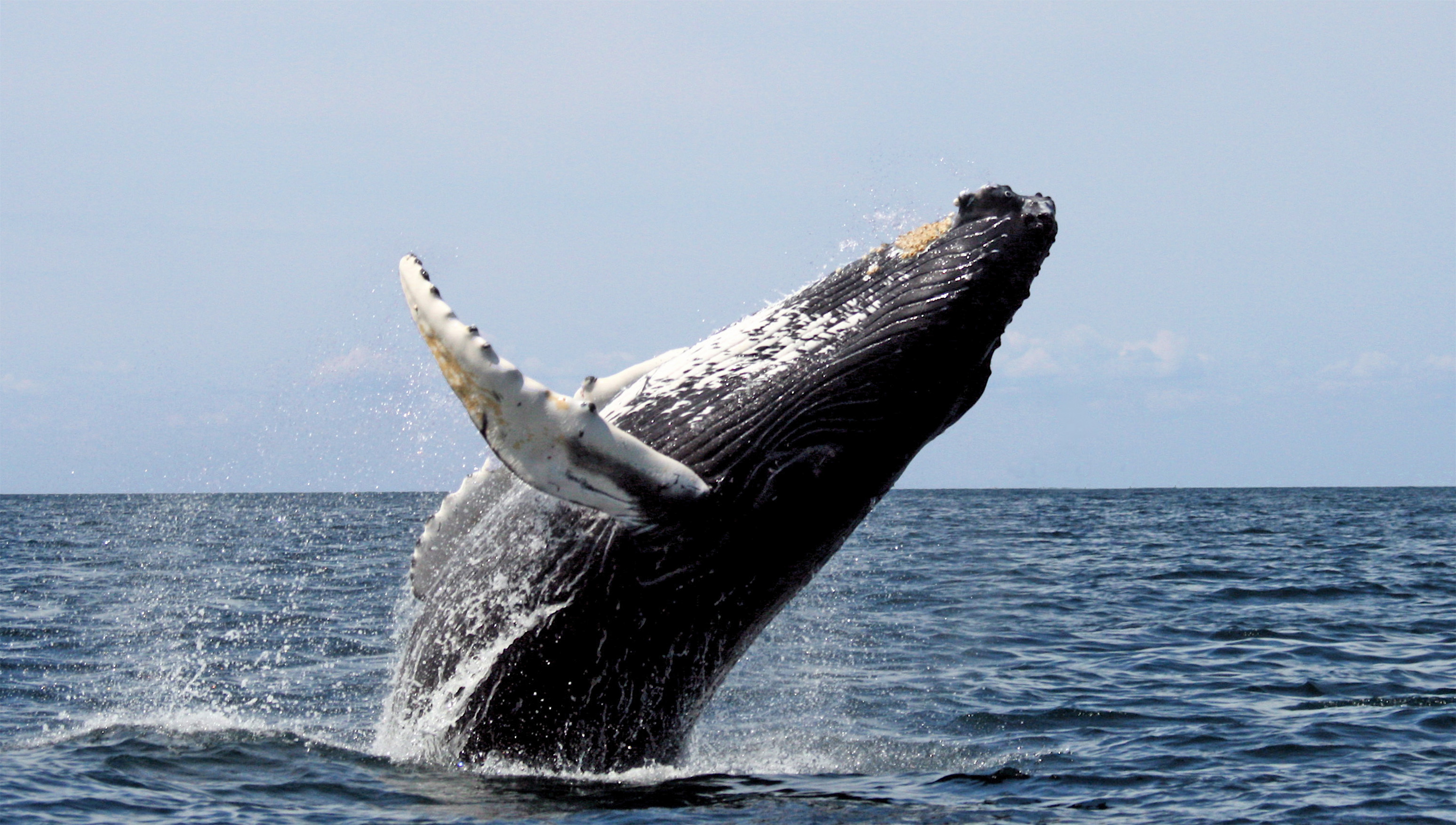
NY Times feature on whales and us

"Human-whale relations have long been defined by this stark dualism: manic swings between mythologizing and massacre; between sublime awe and assiduous annihilation, the testimonies of their slayers often permeated with a deep sense of both remorse and respect for the victims."


In between these extremes, the relationship between humans and whales turns out to be social and complex. Among themselves, whales have languages, communities, and actually resemble us more than we would care to admit. So given our history of hunting whales and driving them to suicide by the cacophony of underwater sonar, could they find it in their hearts to forgive us?

Towards its conclusion, this article by Charles Siebert raises the issue of anthropomorphism. Because of the close parallels in their behavior and sociality to that of our own species, it is tempting to suppose that whales and other cetaceans have feelings and motivations like we do, that they feel sadness or gladness when they display aversion or preference.

Anthropomorphism has long been the big taboo in the field of ethology, because of the concern that it is unscientific and sentimental, so generations of behaviorists have been taught to refer to their animal subjects by numbers rather than names, and to carefully suppress their instinct to ascribe human-like motivations and feelings to them. The scientist that the author quotes, Toni Frohoff, is quick to say: "I don't anthropomorphize", but also that "those who would reject out of hand the idea that whales are intelligent enough to consciously interact with us haven’t spent enough time around whales."

The intuition of a seasoned and experienced observer encodes subtle nuances and detail that the hypothesis-testing model of science can be blind to. The question, of course, is how to translate the ineffable quality of a humpback gently nudging a dive team that had recently freed it from a tangle of rope into some convincingly systematic scheme of explanation. It would be very satisfying if the rigorous study of cetaceans can give us insight into whether these animals, like us, are able to lead rich and interesting internal lives.

Sunday, December 23, 2007

An Ode to Whales

There is something fascinating about whales and dolphins. I remember giving a lecture in school on Lipids (an 'A' level biology subtopic) and as a digression, I told the class a story about Whaling in Nantucket in the 18th century. Its somewhat related to lipids as the whaling industry was mainly based on the lipid found in the spermaceti of the sperm whale. A large whale could provide up to 3 tons of that valuable wax which was odorless and non-oily to the touch.

Anyway, I played some sound clips of whales singing (yes, they do sing and in different dialects too, depending on which pod they belong to) and after that auditory experience, the students (about 300) clapped and cheered. There must be something mesmerizing about whales in our human psyche. I was glad to know that most students displayed a sense of biophilia, sensu E.O. Wilson.

Scientifically, Cetaceans are animals belonging to the Order Cetacea, which, include whales, dolphins and porpoises.


Actually the reason why I am posting here is because I came across this article about whaling in Japan and its just inexplicable that whaling still occurs. Hey, I understand if the IƱupiat Eskimos do it to survive (see my post on a book I read about Eskimo whaling) but to state scientific reasons for whaling is entirely beyond reasonable acceptance. Its like killing cats randomly and saying we need data.

BBC NEWS | Asia-Pacific | Whaling: The Japanese position

Note this statement - "Over a six-month period, it will kill 1,000 whales as part of what it says is a scientific research programme."

I am no whale fanatic but they are just lovely creatures. I have had nice dreams about dolphins and whales too and those were deep and meaningful ones for me. They at least represent the wonders that nature has produced. And at most, are inspiring to many people. Scientifically, the are really peculiar and interesting ends of the evolutionary tree. See link below about the recent fossil discovery that shed new light on the evolutionary research to trace which extinct land-dwelling mammals were the probable ancestors of Cetaceans

Deerlike Mammal Was Whale Ancestor?

Ivan's Dolphins Galaxia and Into the Deep feature some whale and dolphin sounds. They are so enchanting and give a sensitive dimension to the music.

My point is "Stop Whaling!"